
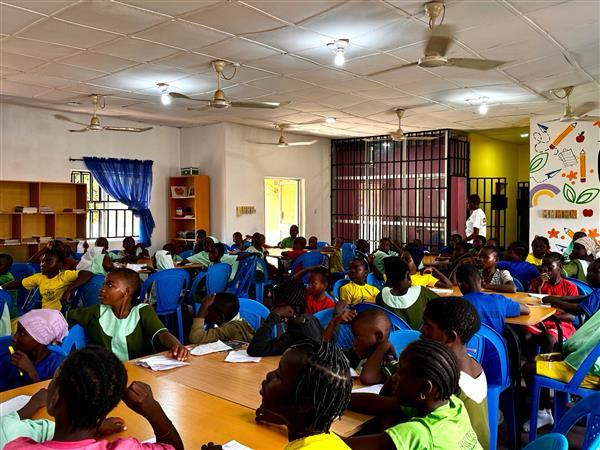
There was a noticeable buzz inside Learning Resource Centres across government schools in Nigeria. Pupils filed in with unusual excitement, their voices rising above the usual morning rhythm. Something had changed.
At one of the centres, Ms Bisola, the ACE Charity LRC coordinator, waited for the room to settle before breaking the news. The letters had arrived.
Weeks earlier, the children had written to pupils in the United Kingdom as part of the Nigeria-UK classroom exchange, a cross-cultural initiative. Now, responses had come back. As the printed copies were handed out, the room fell into a mix of laughter, curiosity, and quiet concentration.
For many of the pupils, this was their first direct connection with someone their age living in another country.
Itohan, a pupil in Primary 5, wrote about her family and her love for jollof rice.
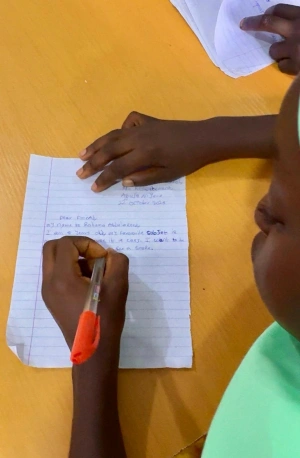
Mark focused on football and his support for Chelsea, while Fatima, in Primary 4, described her favourite subjects and her ambition to become a teacher, determined to help children learn to read and write.
The replies from the UK were just as personal. One pupil asked whether large families were common in Nigeria. Another spoke about playing dodgeball. A seven-year-old named Ben described his favourite activities, while others asked simple but telling questions about food, school life, and culture.
In that moment, the Nigeria-UK classroom exchangewas no longer an abstract idea. It was unfolding in real time, through the words of children.
From Letter Writing to Real Learning
The exchange is part of the Nigeria-UK classroom exchange initiative, led by ACE Charity, an organisation working with government schools in Nigeria to improve access to learning resources and pupil engagement. The programme connects pupils with their peers in UK state schools through letter writing, storytelling, and creative expression.
At its core, the Nigeria-UK classroom exchange is about making learning more immediate. Instead of writing exercises that end with a teacher’s marking pen, pupils now write with the knowledge that someone else, far away, will read and respond.
Teachers involved in the programme say the difference is clear. Pupils take greater care with their writing, ask more questions, and show a deeper interest in how others live.
A primary school teacher involved in the sessions said the children become more engaged once they realise their audience is real. “They want to be understood,” she explained. “They want to explain their lives properly.”
That shift turns a simple classroom activity into something more meaningful.
Confidence, Curiosity and Voice
For many pupils, the Nigeria-UK classroom exchangehas opened up a new sense of confidence. Through letters, drawings, and shared stories, they begin to articulate who they are and what matters to them.
They write about their homes, their favourite meals, their daily routines, and their ambitions. They draw pictures of their communities and describe celebrations and school life.
These are not experiences often shared beyond their immediate environment. The opportunity to communicate with an international peer gives their stories weight.
In the process, literacy improves almost naturally. Reading becomes purposeful. Writing becomes more expressive. Communication becomes something to practise, not just complete.
Learning Beyond Textbooks
For pupils in the UK, the exchange shifts learning beyond the page. Instead of reading about Nigeria, they encounter it through the words of children their own age.
Questions that might seem simple begin to carry more meaning. What do you eat at home? What games do you play after school? What does your day look like? In the answers, everyday details build a clearer picture of another world.
This kind of interaction makes the Nigeria-UK classroom exchange a two-way learning experience. Both groups of pupils begin to recognise differences, alongside unexpected similarities.
Shared interests in football, favourite subjects, and everyday routines create a sense of connection that extends beyond geography.
A Simple Idea with Wider Impact
At a time when international educational programmes often involve travel, funding, and complex logistics, the Nigeria-UK classroom exchange offers a simpler model.
There are no flights or expensive exchanges involved. Instead, the connection is built through letters, guided activities, and structured classroom engagement.
Yet the impact is clear.
Pupils develop early awareness of a wider world. They learn to communicate across cultures. They begin to look beyond what is familiar to them, noticing both the differences and the similarities in how other children live.
Educators working with ACE Charity say those early exchanges stay with the pupils, influencing how they listen, respond, and relate to others as they grow.
Building Global Awareness from Local Classrooms
The experience of the Nigeria-UK classroom exchangepoints to something often missed in education. Meaningful global exposure does not always depend on complex systems or travel.
Sometimes it starts with a question written in a letter. Sometimes it builds through a shared story, exchanged between children who may never meet.
And sometimes, it takes shape in a classroom where a child realises that their voice can travel beyond their immediate world.
As pupils folded their letters and compared responses, what stood out was not just the excitement of receiving mail. It was the quiet recognition that somewhere else, another child had taken the time to listen, respond, and connect.
That is where learning deepens, and where the Nigeria-UK classroom exchange becomes more than a programme. It becomes an experience that stays with them.